When evaluating steel tank manufacturers for an East African project, clients need more than a tank capacity and a delivery estimate. They need to understand where principal tank components are manufactured, which activities may be completed locally and how the various parts of an order are brought together for installation.
SBS Tanks serves customers across Kenya, Tanzania and Uganda using manufacturing capability based in Durban, South Africa, alongside project-specific regional arrangements. The precise combination depends on where the tank will be installed and what the project requires.
The Durban manufacturing foundation
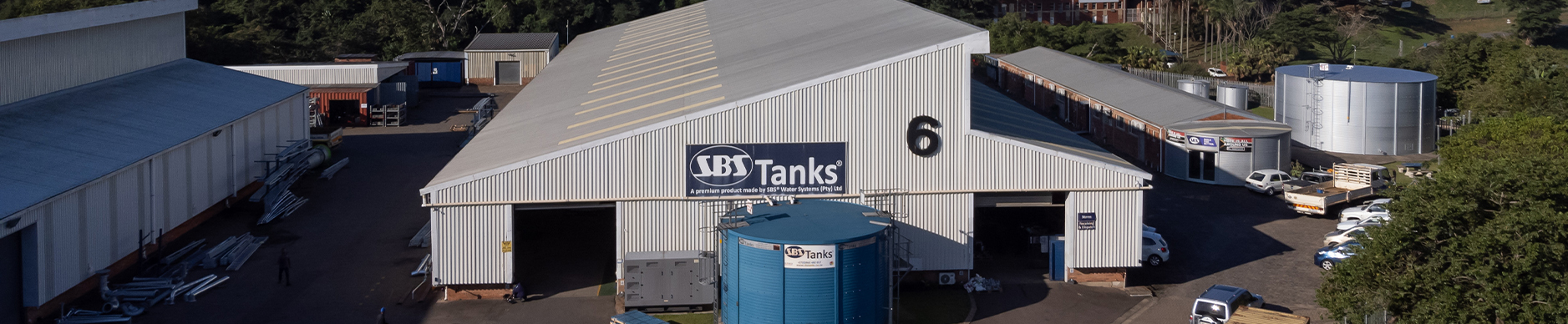
SBS’s Pinetown facility manufactures core steel tank components for regional supply. Its Rolling department forms steel panels for the tank body. Liner Manufacturing prepares liners matched to the tank and stored-liquid application. Specialist fabrication teams manufacture structural and functional components, while order-consolidation activities prepare the relevant parts for installation.
For applicable East African tank orders, the steel tank body, internal liner and water-level indicator are manufactured and supplied from Durban. These activities are part of one coordinated tank manufacturing system, even though the project site may be thousands of kilometres away.
When selected fabrication takes place in Kenya
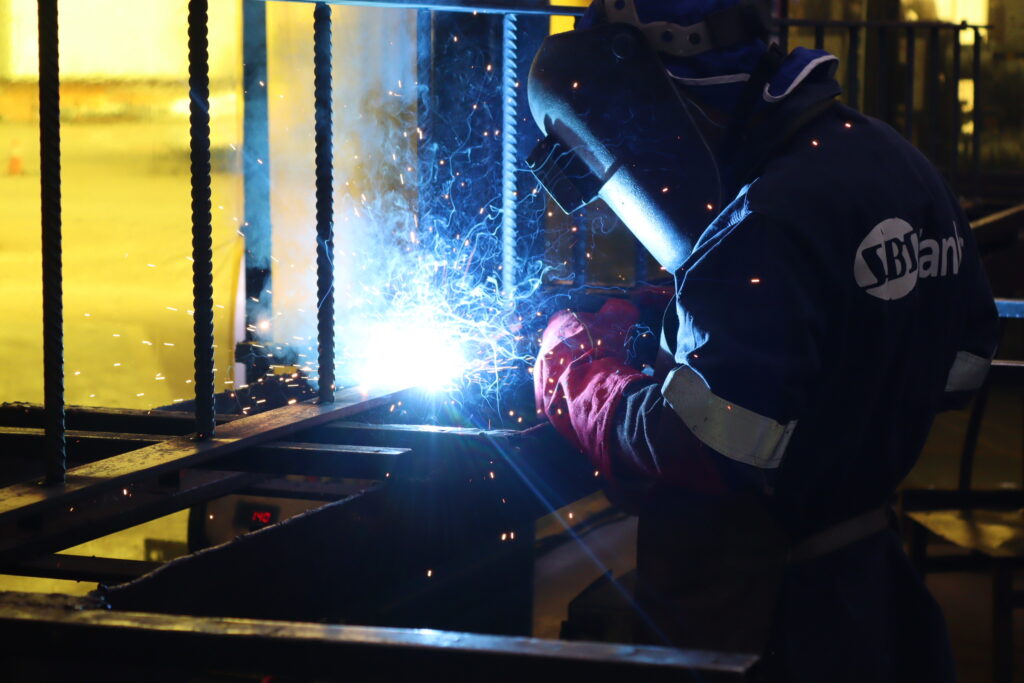
For some projects installed in Kenya, SBS East Africa arranges local fabrication of selected components through independent specialist providers. Depending on the project, those components may include nozzles, roof trusses, vents and tank access items. This is not an SBS-owned manufacturing factory in Kenya; the work is outsourced to suitable local fabricators, welders and galvanising providers.
This distinction is relevant to procurement and construction teams. It means project sourcing arrangements should be confirmed for the actual order, rather than assuming that every component comes from the same country. The local fabrication activities must also be described accurately: they do not imply that SBS’s Durban Rolling or Liner Manufacturing processes have been transferred to Kenya.
Kenya, Tanzania and Uganda are not one identical supply route
A Kenyan project that includes local fabrication can have a different component supply arrangement from a project in Uganda or Tanzania. Where project components are shipped directly from Durban to a Ugandan or Tanzanian site instead of passing through Kenya, SBS can manufacture the required component set in South Africa.
There is no need to make a universal claim about sourcing or routing. The essential point for an engineer or contractor is to confirm the tank specification, the source of relevant components and the assembly information appropriate to that project.
What the manufacturing story means for project delivery
The finished tank is built from many coordinated items: curved steel panels, an application-appropriate liner, structural elements, water connections, access items and the fasteners or fittings required for assembly. The manufactured parts must relate to the same project configuration even when their supply routes differ.
For a buyer, useful pre-order questions include which components are manufactured in Durban, whether selected work is sourced locally in Kenya, and which party manages the relevant information and interfaces. These are practical questions, not simply claims about being a local or international supplier.
Conclusion
SBS’s East African manufacturing proposition starts with its established South African production capability and extends to carefully defined project arrangements in the region. Durban remains the source of important tank body and liner components, while selected fabrication may be sourced locally for appropriate Kenyan installations.
If you are specifying a water storage tank in Kenya, Tanzania or Uganda, discuss the intended application, component requirements and supply arrangements with SBS East Africa so that the proposed tank and regional service pathway are clear from the outset.
Frequently asked questions
Does SBS operate its own steel tank factory in Kenya?
No. For selected Kenyan projects SBS East Africa uses external local fabrication providers for certain components; the principal SBS manufacturing facility is in Durban.
Where are SBS tank liners manufactured for East African projects?
The SBS liner manufacturing operation is based in Durban, South Africa.
Are all Kenyan tank components imported?
Not necessarily. Some Kenyan projects include selected locally fabricated nozzles, trusses, vents or access items.
Do Uganda and Tanzania projects always pass through Kenya?
No. Some are supplied directly from Durban to their destination sites, with the required components manufactured in South Africa.
What should a buyer confirm before ordering?
Confirm the tank configuration, application, component sourcing, project requirements and site installation arrangements.